
Virtual Credit Cards Germany


View Details Hide Details
View Details Hide Details
View Details Hide Details
View Details Hide Details
View Details Hide Details

View Details Hide Details
View Details Hide Details
View Details Hide Details
View Details Hide Details

View Details Hide Details

View Details Hide Details
View Details Hide Details
View Details Hide Details
View Details Hide Details

View Details Hide Details
View Details Hide Details
Looking for a virtual credit card in Germany? Whether you want safer online payments, instant card access, or a backup while traveling, virtual cards offer a flexible and secure alternative to physical plastic.
They’re fast to issue, easy to manage, and often come with lower fees — but not all virtual cards are created equal. Here’s how to pick the right one and what to watch out for.
What Is a Virtual Credit Card?
A virtual credit card, or digital credit card, is a digital-only card that exists on your phone or in your banking app — no plastic, no waiting for the post. It works just like a regular Visa or Mastercard for online purchases, subscriptions, and mobile wallets like Apple Pay or Google Pay.
The card has a 16-digit number, CVV code, and expiration date, just like a physical card. You can use it instantly after approval, and many providers let you freeze, replace, or delete the card at any time. Some even offer disposable card numbers for extra security.
Virtual cards are ideal for:
- Online shopping
- Travel bookings
- Subscription services
- One-time payments
- Replacing lost/stolen cards temporarily
In Germany, virtual cards are offered by fintechs like Revolut, Wise, bunq, Vivid, and sometimes as a companion to physical credit cards from traditional banks.
How to Get a Virtual Credit Card in Germany
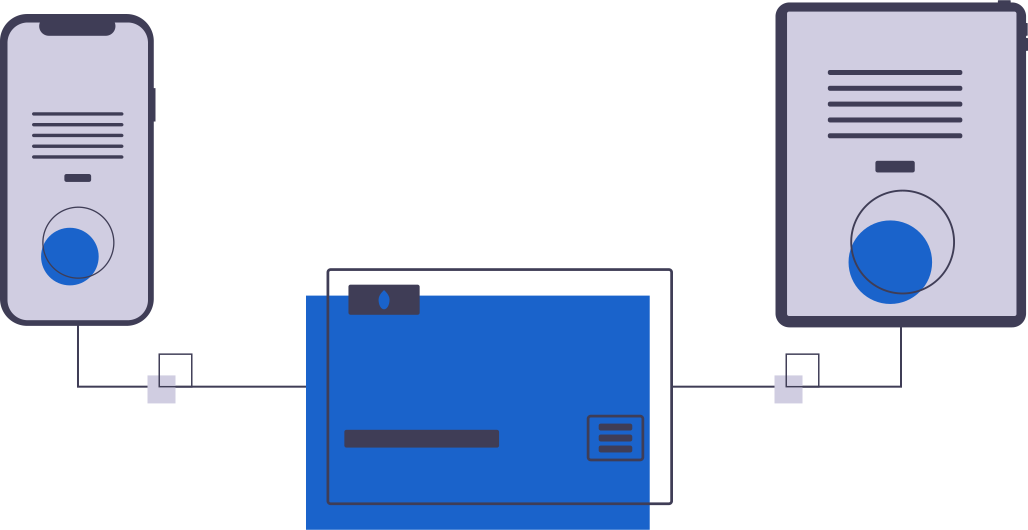
Getting a virtual credit card in Germany is fast, digital, and often easier than applying for a traditional card. Most providers offer instant issuance through an app, with minimal paperwork and no need to visit a branch. Depending on the card type (prepaid, debit, or credit), requirements may vary.
Step-by-step: How to get a virtual credit card in Germany
- Choose a provider (fintech or bank)
- Select the right card type
- Download the app and sign up
- Verify your identity (VideoIdent or PostIdent)
- Link or open a bank account
- Receive and activate your virtual card
- Top up or use linked funds to start spending
1. Choose a provider
Germany has several strong options when it comes to virtual credit cards — from fintechs to online banks. If you’re unsure where to start, check our full list of recommended virtual card providers at the top of this page. It highlights key features like fees, currency support, and mobile compatibility to help you make the right choice.
2. Select the right card type
Virtual cards can be:
- Prepaid – load funds in advance
- Debit – linked to your account balance
- Credit/charge – with a monthly limit (less common for virtual-only)
Choose based on whether you need instant use, budget control, or a credit line. With a charge card, the provider normally collects the full balance on the due date; a credit card may offer Teilzahlung (instalments or revolving repayment) or Vollzahlung (the full balance paid each month). These options and their costs vary by issuer, so check the product conditions before applying.
3. Download the app and sign up
Install the provider’s app, enter your personal details (name, address, email), and choose your card type and plan. Some services offer free and premium tiers.
4. Verify your identity
Most German providers use VideoIdent (video call with your passport) or PostIdent (in-person ID at Deutsche Post). This step is required to comply with banking regulations. Depending on the provider, you may also be asked for a German address, proof of income or a Meldebescheinigung — official confirmation of registration at your German address.
5. Link or open a bank account
Some virtual cards require a linked German IBAN, while others provide their own account (e.g. Wise, Revolut). You may need to deposit a small amount to activate the card. A German IBAN is not the same as a credit line: it may simply identify the Girokonto (current account) from which card payments are taken.
6. Receive and activate your virtual card
Once approved, your virtual card is issued instantly in the app. You’ll see the card number, CVV, and expiry date — ready for use online or in mobile wallets. “Instant” normally refers to digital issuance after verification; the account may still need funding and some merchants may require an additional verification step.
7. Start using your card
Use it for online purchases, subscriptions, or add it to Apple Pay/Google Pay for in-store payments. You can freeze or regenerate the card anytime if needed.
Virtual vs Standard vs Prepaid Credit Cards – What’s the Difference?
Virtual credit cards are fast, secure, and flexible — but how do they compare to standard physical credit cards or prepaid cards?
Each type serves a different purpose, and the best choice depends on how you spend, where you use the card, and what features you value most.
Comparison Table: Virtual vs Standard vs Prepaid Credit Cards
| Feature | Virtual Credit Card | Standard Credit Card | Prepaid Credit Card |
|---|---|---|---|
| Physical Card | ❌ (digital-only) | ✅ | ✅ (optional virtual version) |
| Instant Issuance | ✅ (in app) | Varies; physical delivery takes longer | ✅ |
| Credit Line | Rare (mostly debit/prepaid) | ✅ (with SCHUFA/income check) | ❌ |
| Requires SCHUFA | Depends on the underlying product | ✅ (most providers) | ❌ |
| Best for | Online shopping, travel, subscriptions | General use, travel, flexible spending | Budgeting, students, no credit history |
| Mobile Wallet Compatible | ✅ (Apple/Google Pay, if supported) | ✅ | ✅, if supported |
| Security Features | ✅ (freezing, dynamic CVV, disposable) | Moderate (PIN, 3D Secure) | ✅ (limited exposure) |
| Acceptance | Online, mobile wallets | Online & in-store | Online & in-store |
| Top-up Required | Yes (if debit/prepaid) | No (billed monthly) | Yes |
| ATM Withdrawals | Rare or limited | ✅ | ✅ (fees may apply) |
Summary
- Virtual cards are ideal for online safety and instant access, but may not work for in-store purchases unless used via mobile wallet.
- Standard credit cards are more versatile but harder to get — especially for those without a stable income or SCHUFA score.
- Prepaid cards are the most accessible and safest for budget control, but offer fewer features and no credit line.
Check acceptance before relying on a virtual card
A virtual card can be suitable for an online checkout but unsuitable for a hotel, car-rental desk or offline terminal. These merchants may place a deposit or verify the physical card, and a disposable card number may not work for recurring charges or refunds. Before travelling, confirm that the card supports mobile-wallet payments, offline or contactless transactions, cash withdrawals and the relevant merchant’s deposit procedure.
Also check the current pricing for the account and card. Fees can apply to foreign-currency transactions, ATM withdrawals, replacement cards, expedited services, top-ups or premium plans. Terms vary by provider and can change, so the issuer’s current price list and card conditions should be checked before applying.
Pros and Cons of Virtual Credit Cards in Germany
Pros
- Instant issuance – Get your card within minutes after approval
- High security – No physical card to lose; supports freezing, CVV refresh, and disposable numbers
- Perfect for online use – Ideal for subscriptions, one-time payments, and e-commerce
- Works with mobile wallets – Use with Apple Pay and Google Pay in stores
- May not require a SCHUFA check – Many virtual cards are prepaid or debit-based, but requirements depend on the provider and product
- Low fees – Often fewer costs than traditional credit cards
Cons
- Not accepted everywhere – May not work for hotel deposits, car rentals, or in-store purchases without mobile wallet
- No physical backup – In case of lost phone or app access issues, you’re locked out
- Limited credit options – Rarely offers an actual credit line or revolving balance
- ATM access limited or unavailable – Not ideal if you need cash withdrawals
- Some cards have usage restrictions – E.g. monthly top-up limits or merchant limitations
Before you apply: virtual-card checklist
- Confirm whether the product is credit, charge, debit or prepaid.
- Check whether a SCHUFA enquiry, income evidence or German address is required.
- Review monthly, annual, foreign-currency, ATM, top-up and replacement fees.
- Confirm support for Apple Pay or Google Pay if you need in-store payments.
- Check whether subscriptions, refunds, hotel deposits and car-rental pre-authorisations are supported.
- Keep another payment method available in case your phone, app or card is unavailable.
Tips for Using a Virtual Credit Card Responsibly
Virtual credit cards offer speed and convenience — but you still need to manage them wisely. Just because there’s no plastic doesn’t mean there’s no risk. Here are practical tips to help you use your virtual card safely, efficiently, and without overspending.
Use for trusted transactions only
Even though virtual cards reduce fraud risk, always use them on secure websites and avoid entering card details on unknown or suspicious platforms.
Enable instant notifications
Turn on app alerts to track every transaction in real-time. This helps you spot unauthorized activity immediately and freeze the card if needed.
Use disposable card numbers for one-time purchases
Many providers let you generate a new virtual card for each transaction. This prevents long-term misuse if a merchant’s system is compromised. Disposable numbers are not suitable for every merchant, subscription or refund, so use a normal virtual card where the card details need to remain unchanged.
Monitor your balance or top-ups
If you’re using a prepaid or debit-based virtual card, keep an eye on your balance. Avoid failed payments by ensuring enough funds are available before recurring charges (e.g. streaming services).
Secure your phone and app
Use biometric locks, PIN codes, and two-factor authentication to prevent unauthorized access to your virtual wallet or banking app.
Link only to essential services
Keep your virtual card connected to necessary subscriptions only. This limits exposure if your credentials are ever leaked or stolen.
FAQ
Are virtual credit cards accepted in stores?
Only if linked to a mobile wallet like Apple Pay or Google Pay. Without it, virtual cards can’t be used in physical terminals. Acceptance also depends on the provider, card network and merchant.
Do virtual credit cards require a SCHUFA check?
It depends on the product. Most prepaid or debit-based virtual cards do not require a credit history, but a provider may still carry out identity, compliance or other checks. A virtual card that forms part of a genuine credit-card product may involve a SCHUFA check. Check the provider’s application information rather than assuming that every virtual card is SCHUFA-free.
Can I withdraw cash with a virtual credit card?
Rarely. Most virtual cards do not support ATM withdrawals. Some providers may support cash withdrawals through a compatible physical card or wallet, but availability and fees vary. If you need regular access to cash, use a traditional debit card instead.
Can I get a virtual card instantly?
Often, yes. Providers may issue a virtual card in the app after identity verification, ready for online use. The exact process, timing and availability depend on the provider, card type and approval checks. A physical card, where available, will normally arrive separately.
Are virtual credit cards secure?
They can be. Features such as card freezing, transaction notifications, 3D Secure, biometric app access and disposable numbers can reduce exposure. They do not eliminate scams, account takeover or unauthorised payments, so use secure websites, protect your phone and review transactions regularly.